
Style & care guide
The crafts behind every piece.
A short guide to phulkari, kundan and juttis: where they come from, how to wear them and how to keep them looking their best.
Phulkari
The embroidery of Punjab
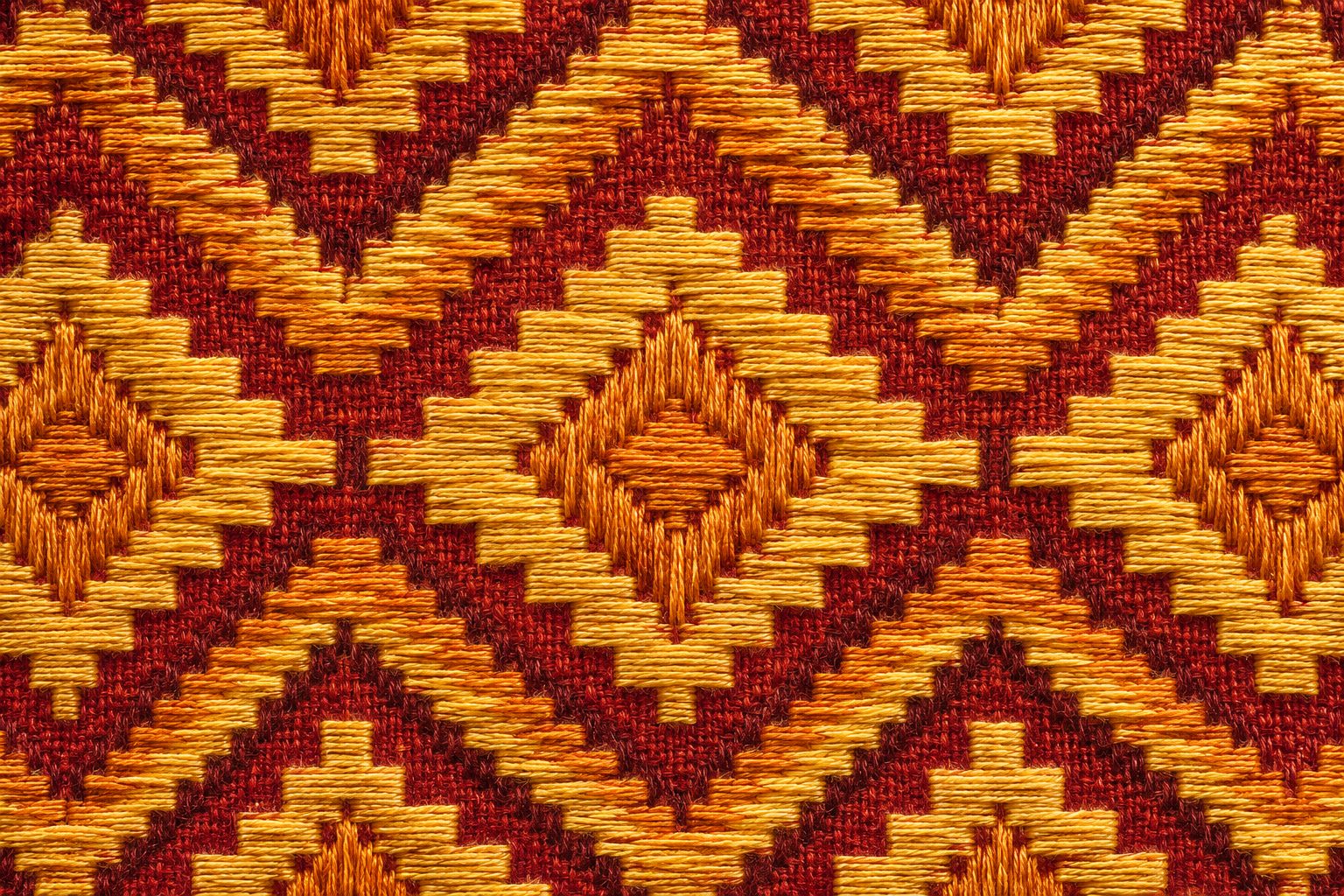
Phulkari means “flower work”. It is the traditional embroidery of Punjab: long, flat darning stitches in glossy, untwisted floss, worked from the back of the cloth so that the colour builds into geometric patterns on the front. Traditionally it was stitched by women on hand-spun cotton (khaddar), often over many months, and given to a daughter for her wedding.
Phulkari and bagh
In a phulkari, the motifs are scattered across the cloth and the ground shows between them. When the embroidery covers almost the whole cloth, it is called a bagh, a “garden”. Some designs carry figures from village life: the hathi (elephant) is one of the best loved.
How to wear it
- Drape a phulkari over a plain suit in a single colour, so the embroidery is the star.
- For haldi and mehndi, yellow and orange phulkaris glow; for Lohri and Teeyan, go as bright as you like.
- Let the jewellery stay simple, such as jhumkas or a single long necklace, when the phulkari is heavy.
Jewellery
Kundan, pachi, jadau and meenakari
Kundan is one of India’s oldest ways of setting stones: each stone is held in a bed of refined gold foil rather than in claws, which gives that soft, glowing edge. Today’s kundan fashion jewellery recreates the look with glass stones in gold-tone settings, so the same bridal style is within everyone’s reach.
- Pachi kundan: stones set close together in a metal setting, often with an antique finish and coloured beads.
- Uncut kundan: larger, flat, irregular stones in the style of polki, for a soft, heirloom sparkle.
- Jadau: a Rajasthani style of embedding stones in an ornate setting, rich and traditional.
- Meenakari: colourful enamel painted on metal, often on the back or on pendants, with peacocks and flowers.
Which set for which occasion?
- The wedding day: a heavy choker or a layered set, with a maang tikka and, for some, a passa.
- Sangeet, jaago and reception: a long set or a statement necklace that moves with you.
- Festivals and family functions: lighter long sets, jhumkas and chandbalis.
Caring for fashion jewellery
- Put your jewellery on last, after perfume, hairspray and lotion, and take it off first.
- Keep it dry, and wipe it with a soft, dry cloth after wearing.
- Store each set flat in its box or a soft pouch, away from humidity, so stones and beads don’t knock together.
Juttis and dupattas
Finishing touches
Punjabi juttis
A jutti is a flat, closed slip-on shoe, traditionally of leather with an embroidered upper. New juttis feel snug at first and soften with wear. Wear them at home for an hour or two before the big day; if you are between sizes, ask us on WhatsApp.
Caring for phulkari and dupattas
- Dry clean embroidered and gota pieces; never wring them.
- Store them folded in a cotton bag, away from direct sunlight, and refold along new lines now and then.
- Keep perfume and jewellery from snagging the threads when you wear them.